Boston · Massachusetts

Junk removal across Greater Boston. The most regulated waste market in the country.

Massachusetts has the strictest waste ban regulations in the United States. Cardboard, metal, yard waste, tires, appliances, mattresses, textiles, and commercial food materials are all banned from disposal. Greater Boston also hosts one of the densest life sciences clusters in the world, anchored by Kendall Square. JRP runs route coverage across Suffolk, Middlesex, Norfolk, Essex, and Plymouth counties.

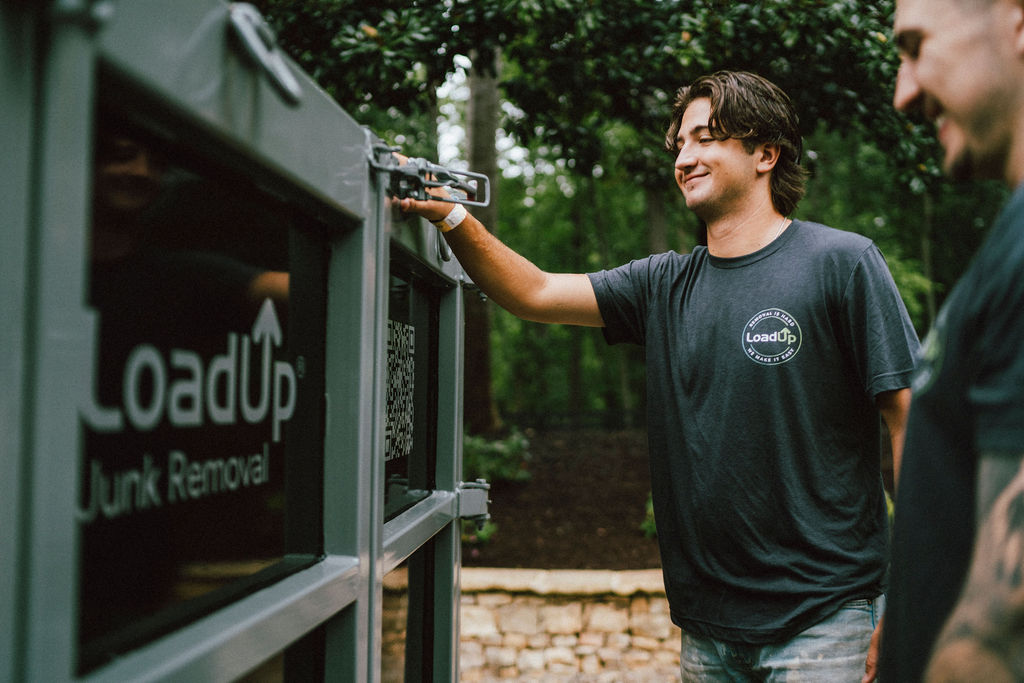
JRP Loaders securing a load in the Boston area
~4.9M
Boston metro population
7
Active MA landfills statewide (lowest per-capita in US)
8+
Banned material categories under MassDEP
2030
MA Solid Waste Master Plan target year

Why Boston is the most regulated market we cover

MassDEP waste bans drive routing decisions on every job.

Massachusetts has more material categories banned from disposal than any other state we operate in. Cardboard, metal, yard waste, tires, appliances, cathode ray tubes, mattresses, and textiles are all prohibited from landfilling at MA solid waste facilities. The mattress and textile bans went into effect November 2022 — relatively recent additions. The Commercial Food Material Disposal Ban additionally requires food-generating businesses to divert organic waste from disposal.

The state's 2030 Solid Waste Master Plan, finalized in October 2021, targets a 30% reduction in disposal volume (from 5.7M tons in 2018 to 4M tons by 2030) with a long-term goal of 90% reduction by 2050. Massachusetts already has the lowest per-capita landfill capacity in the nation, with only 7 active landfills statewide. The disposal infrastructure leans heavily on 12 waste-to-energy incinerators and over 30 Materials Recovery Facilities.

For commercial customers, this regulatory framework changes vendor selection criteria. Procurement teams at major Boston-area life sciences and tech companies typically have ESG and sustainability requirements that align with state mandates. Vendors that understand the bans operationally — not just at the policy level — have a real advantage.

Why Boston commercial pricing runs higher

Limited landfill capacity translates directly to disposal economics.

Boston-area commercial disposal rates run higher than most metros we cover. The combination of strict waste bans, limited landfill capacity, and required routing through specialized recovery facilities pushes per-ton economics up substantially. Boston-area C&D facilities can run $200+ per ton with $200+ minimums, compared to $35-55 in our Texas markets.

For property managers, GCs, and corporate facility teams, this matters operationally. Quote comparisons across vendors look very different in Boston than in Atlanta or Phoenix. We size pricing to actual disposal economics rather than playing volume games — clients get realistic numbers up front rather than surprise tipping fee pass-throughs after the fact.

Boston's brownstone-heavy older building stock also creates real access constraints. Loading zones, freight elevators, and historic district restrictions are factors we plan into route logistics in ways that don't apply to suburban Sunbelt markets.

Submarkets we cover

Coverage across Greater Boston and the 128 corridor.

Greater Boston spans Suffolk, Middlesex, Norfolk, Essex, and Plymouth counties. The Charles River separates Boston from Cambridge but the commercial markets are deeply interlinked. The 128 corridor (I-95) loops the metro and concentrates major suburban tech and life sciences activity.

CBD office & financial
Downtown Boston / Financial District

Trophy office, financial services concentration (Fidelity, State Street, John Hancock). Common scopes: office TI debris, hotel furniture refreshes, decommissioning, and high-rise multifamily turnover. Loading dock and freight elevator coordination required.

Tech & mixed-use
Seaport / South Boston

Newest commercial corridor in the metro. Major tech and life sciences office (Vertex, Amazon, MassMutual). Active multifamily and retail. Common scopes: office TI work, decommissioning, and corporate facility refreshes.

Life sciences corridor
Cambridge / Kendall Square

One of the densest life sciences clusters in the world. Moderna, Vertex, Biogen, Sanofi, Takeda. Heavy office TI and lab-adjacent commercial activity. Regulated medical and laboratory waste handled through specialized partners — we focus on non-regulated commercial scope.

Established residential
Back Bay / Beacon Hill / South End

Historic Boston neighborhoods with brownstones, active residential, and restaurant retail. Common scopes: pre-listing cleanouts, estate work, and small-business commercial. Historic district access protocols and brownstone access constraints apply.

Tech & suburban office
Waltham / Lexington / 128 corridor

Major suburban tech and life sciences corridor along I-95/Route 128. Substantial office park presence. Active multifamily growth. Common scopes: office TI work, corporate facility refreshes, and decommissioning.

Affluent suburban
Newton / Brookline / Wellesley

Affluent residential corridors with active high-end residential, retail, and small commercial. Common scopes: pre-listing cleanouts, estate work, and high-end residential project work. Strong realtor referral relationships.

Mixed-use & tech
Somerville / Assembly Row

Rapidly growing tech and mixed-use corridor including Assembly Row's corporate office. Common scopes: office TI work, multifamily turnover, and active retail rollouts.

Suburban & industrial
Quincy / South Shore / Braintree

Established South Shore suburbs with active commercial and residential. Boston Environmental operates a soil disposal facility at Blue Hill Cemetery in Braintree. Common scopes: multifamily portfolios and residential project work.

How disposal works in Greater Boston

The infrastructure behind every pickup.

Massachusetts solid waste is regulated by MassDEP under the most aggressive waste ban framework in the United States. The state operates only 7 active landfills statewide — the lowest per-capita capacity in the nation. Disposal volume routes through 12 waste-to-energy incinerators and 30+ Materials Recovery Facilities. We coordinate routing through this specialized infrastructure on every project.

ReSource Roxbury C&D Facility
Permitted capacity 223,000 tons/year · MassDEP-permitted Solid Waste Recycling Facility

Major C&D recycling facility serving Greater Boston. Processes commingled C&D and recovers ~65% of inbound material as woodchips, ferrous metals, aggregate, corrugated paper, and dirt fines for downstream markets. Residue rate typically less than 35%.

James G. Grant Co. C&D Transfer Station
Family-owned, 4-generation Boston operator · $225/ton minimum

State-of-the-art C&D transfer station handling sheet rock, wood/lumber, roofing, flooring, windows, doors, asphalt, brick, and concrete. Construction debris only — does not accept household cleanouts, furniture, clothing.

Massachusetts Waste-to-Energy Network
12 active combustion facilities statewide

Primary disposal endpoint for non-recyclable MSW given the limited landfill capacity. WIN Waste Innovations, Covanta, and other operators run major waste-to-energy facilities across the state. Used as the disposal endpoint for our routes covering Greater Boston commercial volume.

MassDEP-Certified MRFs
30+ Materials Recovery Facilities statewide

Required routing for cardboard, metal, paper, and other recyclables banned from disposal. We coordinate routing through certified MRFs for any project producing material covered by the waste bans.

Mattress & Textile Recovery
Required since November 2022 · Specialized recovery channels

Mattresses and textiles are banned from disposal in MA. We route mattress disposal through certified mattress recyclers and textile material through textile recovery channels. Multifamily and hospitality projects often require coordinated mattress diversion documentation.

Commercial Food Material Diversion
Required for food-generating businesses · MassDEP regulation

The Commercial Food Material Disposal Ban requires food-generating businesses to divert organic waste from disposal. For hospitality, retail food service, and corporate cafeteria projects, we coordinate routing through composting and anaerobic digestion partners.
Disposal routing depends on waste classification under MassDEP's waste ban framework, project location, and facility capacity. Boston commercial pricing reflects the higher disposal economics driven by limited landfill capacity and required specialty routing.

Most common Boston scopes

Where Boston customers most often work with us.

Tell us about the Boston job.

Single pickup, recurring contract, multi-property portfolio, or one-time project. Whatever the scope, we'll route to the right rep and respond within one business day. For single-item household pickups, the fastest path is self-serve booking with upfront pricing.

Or book a single pickup online →

Request a quote

Boston accounts

No marketing texts. We'll only contact you about your job.