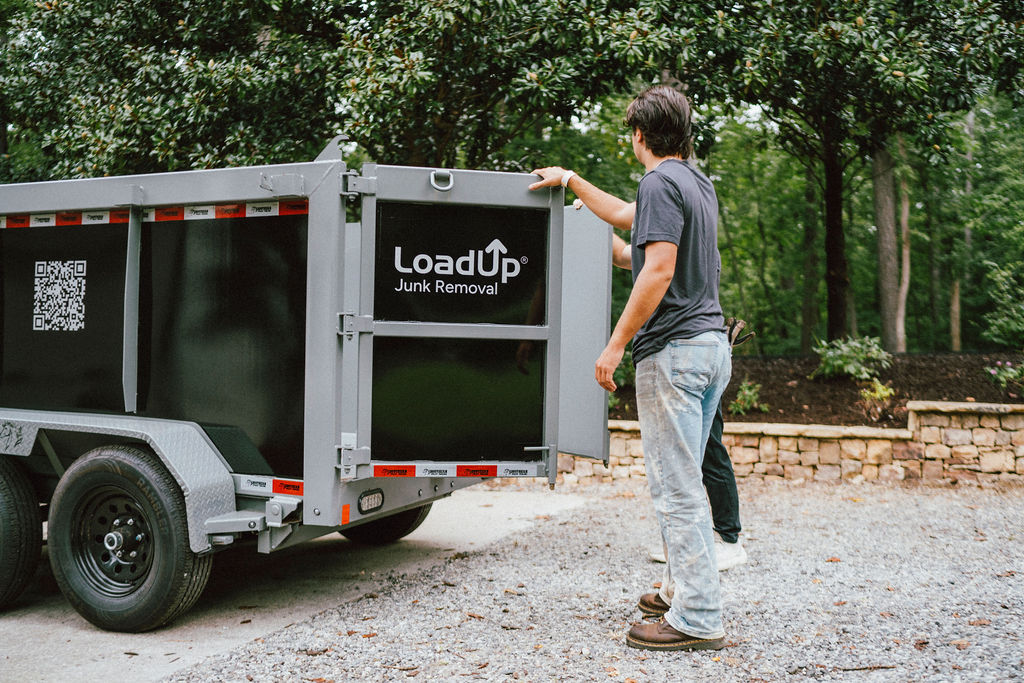
What C&D debris hauling includes
Standard C&D scope covers the full range of construction and demolition materials: drywall, lumber, flooring (wood, vinyl, tile, carpet), framing materials, roofing materials (shingles, tar paper, metal), siding, insulation, concrete and masonry (broken-up), porcelain fixtures, wiring and electrical components, HVAC ducting, and miscellaneous build debris. Mixed loads are standard; sorted loads (clean wood only, clean concrete only) get better diversion rates.
Active jobsite scope works differently than one-time post-build cleanup. Active jobsites typically use a trailer-based model: we drop a trailer on the site, the GC Loaders loads it as the build progresses, we swap a full trailer for an empty one on a 2-3 day cycle. For demolition projects, we run trucks continuously through the day with the demolition Loaders loading directly. Both models scale with project size; a small remodel may use single-pickup hauls, a 50,000-square-foot tear-down may run 10-15 truckloads daily.
Materials typically hauled
- Drywall (broken pieces, demo, scrap from framing)
- Lumber (framing, plywood, sheathing, dimensional)
- Flooring (carpet, vinyl, tile, hardwood, laminate)
- Roofing materials (shingles, underlayment, metal panels)
- Siding (vinyl, fiber cement, wood)
- Insulation (fiberglass, mineral wool, foam, cellulose)
- Concrete and masonry (broken, manageable pieces)
- Porcelain fixtures (toilets, sinks, tubs)
- Wiring, electrical components, HVAC ducting
- C&D-certified facility routing with diversion documentation
Not included in standard C&D scope
Hazardous materials (asbestos, lead paint debris, contaminated soil) require specialty hazmat partner. Active jobsite portable toilets and dumpsters (different vendor category). Roll-off dumpster rental (we offer trailer-based pickup but not traditional roll-off; for full roll-off needs we recommend specialty partners). Heavy equipment and demolition machinery (handled by demolition contractor, not haul vendor).
How C&D debris hauling works operationally
Active jobsite hauling uses trailer-based dispatch. We drop a 16-foot or 20-foot dump trailer on the site at project start, the GC Loaders loads it through the day as debris accumulates, and we swap full for empty on a 2-3 day cycle (or daily for high-volume projects). This avoids the access conflicts of roll-off dumpsters in tight urban sites and gives the GC continuous capacity. The trailer dispatch is set during project intake and adjusted as project pace changes.
C&D-certified facility routing is standard for projects requiring diversion documentation. CalGreen requires 65% C&D waste diversion on most California construction projects; certified processors separate clean wood, clean concrete, and recyclable materials at the receiving facility, generating diversion-rate documentation that the project files with the building department. City of LA mandates routing through certified C&D processors only for projects in city limits, with up to $5,000 per load in penalties for non-certified disposal. Other municipalities have varying rules; we maintain the routing logic per market.
Where C&D debris hauling fits the buyer's workflow
GC project workflow puts haul vendor selection at project planning, not at jobsite start. The GC's project manager evaluates trailer-vs-roll-off options, certified-facility-routing requirements, and dispatch SLA before assigning the haul vendor. For multi-project GCs, we operate under a master service agreement that covers all active projects with consolidated invoicing rather than per-project quoting. Documentation requirements (COI, diversion reports, weight tickets) are pre-set during MSA negotiation.
Demolition project workflow runs faster. Demo contractors mobilize a Loaders, run the demolition over 1-5 days, and need haul capacity that matches the demolition pace. We pre-position trucks and trailers at project start, run continuous pickups through the demolition window, and complete the project with weight tickets and diversion documentation. For large demolition projects (warehouse tear-downs, mall demolitions, multi-building campus clearings), we may bring 5-10 trucks plus support trailers for a single project.
How C&D debris is priced
Trailer-based jobsite hauling prices per swap: $400-$700 per trailer load depending on market, trailer size (16-foot vs 20-foot), and disposal facility distance. For high-volume accounts, monthly trailer service runs $1,800-$3,500 per month for 4-8 swaps. Truck-based pickup prices per load at $1,200-$2,400 per 26-foot truck depending on content mix and disposal routing.
C&D-certified facility routing adds disposal cost (certified processors charge premium tipping fees compared to general construction debris facilities). In CalGreen markets, the routing premium is built into the standard rate because it's required scope, not an option. For demolition projects, multi-truck-day pricing runs $4,000-$15,000 per day depending on truck count and disposal facility distance. MSA pricing for repeat GC accounts gets 10-25% off standard rates.