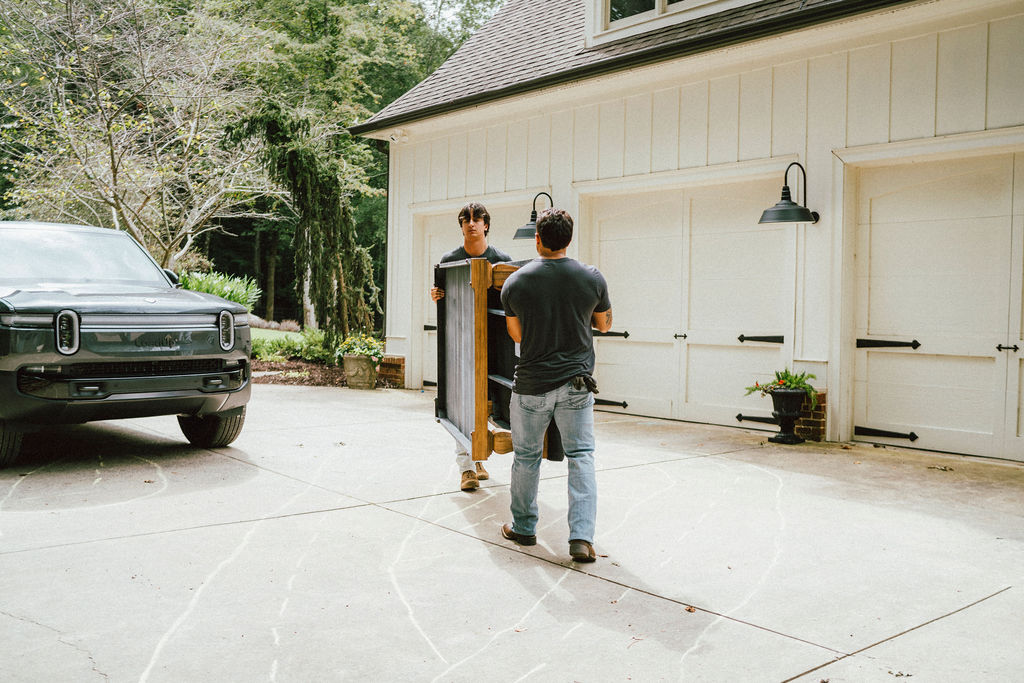
What estate and hoarding cleanouts include
Estate cleanouts are full-property scope. The decedent's belongings stay where they are until family or executor has made decisions about what's kept, sold, donated, or disposed. We work after that decision-making is done, clearing the property to the agreed-upon scope. Most estate jobs run 1-3 days for a 1,500-3,000 square foot property; larger estates or properties with hoarding-adjacent contents take longer. The end state is the property cleared, photographed, and ready for the next phase (sale, rental, repair).
Hoarding work follows the Clutter Image Rating (CIR) framework: Levels 1-5 with 1 being normal clutter and 5 being severe (paths through the property only, biohazard concerns, structural integrity affected). Levels 1-2 are typically standard estate scope. Level 3 requires phased work because the volume and access are challenging. Level 4-5 require specialized PPE, biohazard partner coordination, and often Adult Protective Services involvement when the resident is still living in the property. We assess before pricing on any Level 3+ situation.
Scope typically covered
- Full-property estate cleanouts (1,500-5,000+ sq ft properties)
- Decedent's furniture, appliances, electronics, household goods
- Personal papers and documents (sorted to family before disposal)
- Donation routing for items in good condition (Goodwill, Habitat ReStore, Salvation Army)
- Estate sale coordination with sale company (we work after the sale)
- Hoarding cleanup Level 1-2 (standard scope, no specialty PPE)
- Hoarding cleanup Level 3-4 (phased work, enhanced PPE)
- Hoarding cleanup Level 5 (biohazard partner coordinated, family-coordinated)
- Probate-grade documentation for executor and attorney
- Photo documentation of property condition before and after
Not included in standard scope
Estate sale operation (sale company handles this; we work after). Real estate agent services (we coordinate with the agent but don't list). Locksmith and security services (separate vendor for property security). Repairs and remediation beyond standard cleanup (handled by general contractor or restoration partner). Legal and probate work (handled by probate attorney).
How estate and hoarding cleanouts work operationally
Estate workflow runs in phases. Phase one is pre-cleanout family coordination: the executor or family identifies what's kept (heirloom furniture, jewelry, papers, photos, family-significant items), what goes to estate sale, and what's left for cleanout. We work after that decision-making, clearing the to-be-disposed scope. Phase two is the actual cleanout: 1-3 days of work with a 2-3 Loader Loaders, sorting at the truck (donation vs disposal), photographing the property at start and end. Phase three is documentation: weight tickets, donation receipts, before/after photos delivered to the executor for probate filing.
Hoarding workflow above Level 2 runs differently. Pre-assessment is mandatory because pricing depends on hoarding level, property size, biohazard presence, and family coordination requirements. Level 3 typically runs 3-5 days with phased work (one room at a time, allowing the resident to participate or family to retain items). Level 4-5 requires biohazard partner coordination, specialized PPE (Tyvek suits, respirators, hazmat protocols), and usually multi-week work. Adult Protective Services involvement is common at Level 4-5 when the resident is still living in the property. Family or APS makes decisions about scope; we execute.
Where estate and hoarding cleanouts fit the buyer's workflow
Probate-related estate work flows through the executor or probate attorney. The executor inventories the estate, coordinates with heirs, runs estate sale if applicable, and engages cleanout vendor. We coordinate with the executor on scope, timing, and documentation requirements. For probate properties, the cleanout precedes the sale: executor needs the property cleared and ready for listing or auction. Documentation supports the probate filing showing the estate was administered properly.
Hoarding-related work typically flows through different channels. Property managers handling hoarding tenants engage us when the resident has moved or been removed. Family members handling a hoarding parent or sibling engage directly, often after a hospitalization or court order. APS and similar agencies engage for vulnerable adults. Mental health professionals (clinical hoarding specialists, family therapists) sometimes coordinate with us as part of broader treatment plan, particularly when the resident is participating in the cleanout (Level 3 with active treatment).
How estate and hoarding cleanouts are priced
Standard estate cleanouts price by property size and content volume. A 1,500-2,000 square foot property typically runs $2,500-$4,500 for a 1-2 day cleanout with 2 Loaders. Larger properties (3,000+ square feet) or estates with high content volume run $5,000-$12,000. Pricing includes labor, truck capacity, disposal facility costs, and standard documentation. Donation routing reduces disposal costs and is built into standard pricing.
Hoarding cleanup pricing scales with severity. Level 1-2 prices similar to standard estate scope. Level 3 runs $5,000-$15,000 because of phased work, longer timeline, and family coordination overhead. Level 4-5 starts at $10,000 and runs to $50,000+ depending on property size, biohazard scope, and partner coordination requirements. Pre-assessment is mandatory for Level 3+ because pricing requires understanding the actual scope, not just the property size.