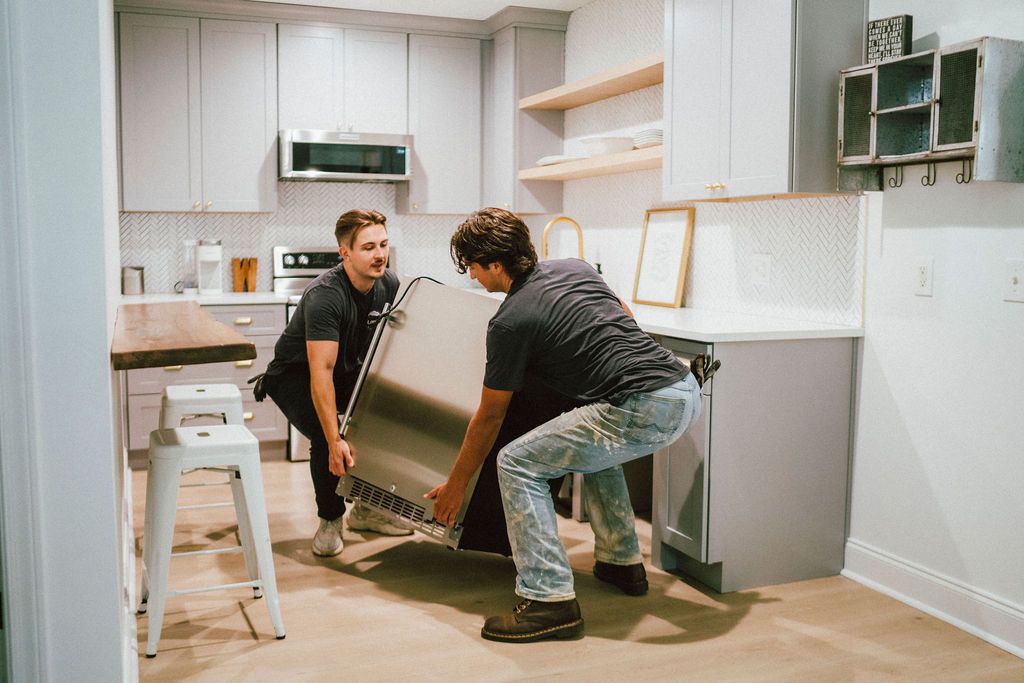
What appliance removal includes
Standard appliance scope covers major kitchen and laundry appliances: refrigerators, freezers, washers, dryers, dishwashers, ovens, ranges, microwaves, water heaters. Plus HVAC items: window AC units, central AC condensers (when accessible), dehumidifiers, water coolers, ice machines. The piece comes out, refrigerant is recovered if applicable, the unit is loaded, and it routes to the right disposal or recycling stream.
Disconnection scope varies. Standard residential pickups assume the customer disconnects (electrical and water lines, gas if applicable). For commercial volume work, we coordinate with the property's facilities or maintenance team on disconnection: hotels typically have engineering staff who handle disconnect; multifamily uses property maintenance; retail and restoration accounts coordinate with the install vendor. Disconnection by JRP is available as add-on scope on commercial accounts.
Appliances typically covered
- Refrigerators and freezers (with EPA refrigerant recovery)
- Washers, dryers, washer/dryer combos
- Dishwashers
- Gas and electric ovens, ranges, cooktops
- Microwaves (countertop, over-range, built-in)
- Water heaters (gas and electric, tank and tankless)
- Window AC units and dehumidifiers (with refrigerant recovery)
- Wine coolers, beverage coolers, ice machines
- Disposals, trash compactors
- Working appliances routed to donation where condition allows
Not included in standard scope
Central HVAC system removal (handled by HVAC contractor, not appliance scope). Commercial restaurant equipment beyond standard kitchen appliances (separate scope under office & commercial cleanouts). Appliances with active leaks or contamination (carrier-required hazmat partner). On-site disconnection on residential pickups (customer responsibility unless add-on scope).
How appliance removal works operationally
Refrigerants are recovered before transport for any appliance containing a regulated refrigerant: refrigerators (R-12, R-134a, R-600a), freezers (same), window AC units (R-22, R-410A), dehumidifiers, water coolers, beverage coolers. Recovery is performed by an EPA Section 608 certified technician using approved recovery equipment. The recovered refrigerant is logged and routed to a certified reclamation partner. The chain-of-custody documentation is retained for 3 years per EPA recordkeeping requirements.
Working appliances in good condition route to donation: Goodwill, Habitat ReStore, local appliance recyclers with refurbishment programs. Working refrigerators particularly often have second-life value for community organizations. Non-working appliances route to scrap metal recyclers (refrigerator carcasses are roughly 75% steel by weight). For commercial accounts requiring donation documentation (charitable receipts), we coordinate that with the receiving partner during job intake.
Where appliance removal fits the buyer's workflow
Multifamily operators run appliance replacement on a kitchen-by-kitchen rolling basis. Apartments turn over, in-unit appliances get inspected, units are flagged for replacement, and the property maintenance team or a contracted vendor handles install. JRP picks up the old units. For 200+ unit portfolios, the volume runs 30-80 appliance pickups per month. We integrate with property maintenance ticketing systems where the operator runs them.
Hotel kitchen replacement programs (mini-fridges, microwaves) follow PIP cycles same as furniture refresh. Larger hotels have central commissary kitchens with commercial-grade appliances replaced on longer cycles. Appliance retailer haul-away programs (Home Depot, Lowe's, Best Buy delivery partners) operate as same-day pickup of the old unit on delivery of the new unit. We're a sub for the delivery vendor, picking up old units same-day.
How appliance removal is priced
Single-appliance pickup is per-item pricing: refrigerators $80-$140 (refrigerant recovery included), washers and dryers $60-$110, dishwashers $50-$80, ovens and ranges $60-$100, water heaters $80-$140 (size-dependent). Window AC units $50-$80 each. The refrigerant-recovery surcharge is built into the base price for cooling appliances; not separately billed.
Volume programs price on a tiered rate card by appliance type. A multifamily operator with 80 refrigerator pickups per month gets a tiered rate that's 25-40% below single-pickup pricing. Appliance retailer haul-away programs price as a per-route rate (the vendor picks up old units on multiple stops, billed by route count and unit count). Hotels and PIP programs price as bundles tied to room or unit count.