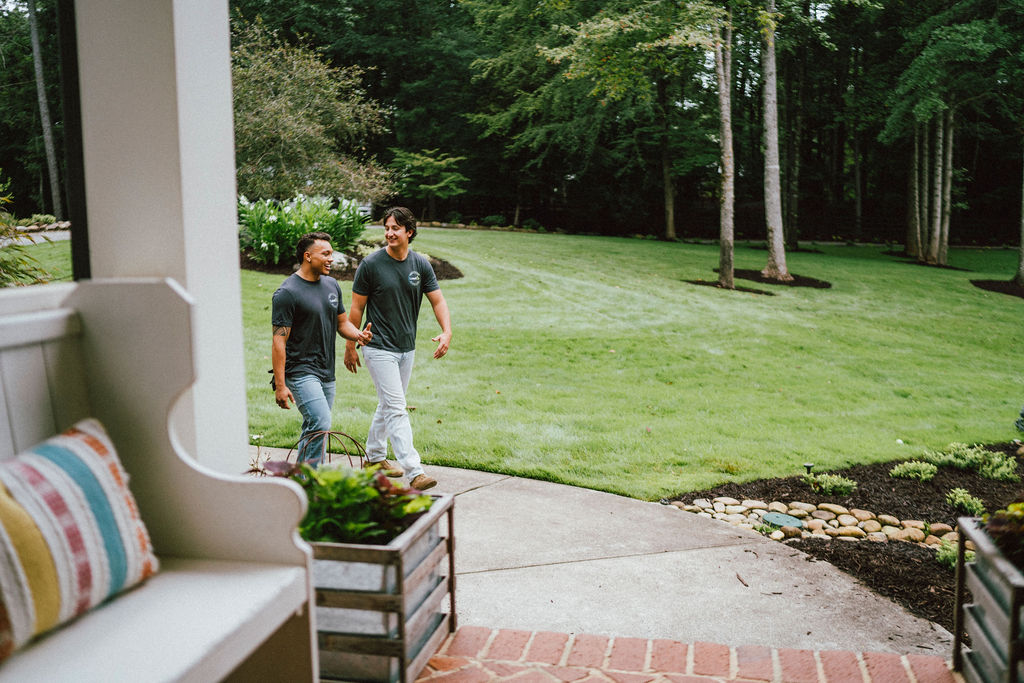
What yard waste and outdoor item removal includes
Standard yard waste scope covers organic and outdoor materials: tree branches and limbs (cut to manageable lengths), leaves and brush, sod and dirt (in volume), garden debris, hedge trimmings. Outdoor items extend the scope to non-organic outdoor things: damaged fencing (wood, vinyl, chain-link), sheds (small, wood-framed, tear-down required), patio furniture, grills (gas tanks removed), play sets and swing sets, trampolines, kiddie pools, garden statuary.
Storm cleanup work has its own operational rhythm. After a storm hits, we coordinate with restoration partners and HOA management to dispatch surge capacity into the affected area: extra trucks, extra Loaders, extended hours. Storm cleanup typically runs 1-3 weeks of high volume followed by tail volume as residents finish individual property cleanup. Fallen trees that require chainsaw work and bucket-truck operation are typically subbed to specialty arborist partners; we handle the haul-away after the cutting is done.
Items typically covered
- Tree branches and limbs (cut to manageable lengths)
- Leaves, brush, garden debris
- Sod and dirt (in volume)
- Damaged fencing (wood, vinyl, chain-link)
- Small sheds (under 12'x12', tear-down required)
- Patio furniture and outdoor seating
- Grills (with gas tanks removed)
- Play sets, swing sets, trampolines
- Kiddie pools, garden statuary, fountains
- Composting routing where municipal infrastructure exists
Not included in standard scope
Live tree cutting and removal (subbed to specialty arborist partners). Hazardous yard chemicals (paints, solvents, pool chemicals) require specialty hazmat partner. Pool removal (above-ground or in-ground) handled under separate scope. Pressure-treated lumber requires specific facility routing because of CCA/copper-arsenate content. Active gasoline-containing equipment without drained tanks (mowers, chainsaws, generators).
How yard waste and outdoor item removal works operationally
Composting routing depends on local infrastructure. In municipalities with commercial composting programs (most of California, parts of the Northeast, some Pacific Northwest cities), organic yard waste routes to composting facilities for diversion. In areas without composting infrastructure, organic waste routes to landfill alongside other yard debris. For HOA accounts requiring diversion documentation (where the HOA's environmental commitments matter), we route to composting wherever it's available and provide diversion documentation.
Outdoor items follow different routing depending on material. Fencing routes to construction debris facilities (lumber recycling for clean wood, scrap metal for chain-link). Patio furniture follows furniture routing (donation when condition allows, scrap for metal frames, disposal for plastic). Sheds dismantle into lumber and roofing components, routed to construction debris. Play sets and swing sets are dismantled (often into 8-10 components), with metal frames going to scrap and lumber going to construction debris.
Where yard waste and outdoor item removal fits the buyer's workflow
HOA recurring programs run quarterly or seasonal cleanups: spring debris from winter damage, fall leaf and brush, post-summer landscaping refresh. The HOA management company schedules the day, residents put items at the curb or in designated common areas, and we run a multi-truck day clearing the property. Recurring HOAs negotiate per-cleanup pricing on a tiered rate card by property size and item volume.
Storm cleanup operates on a different model. After a major weather event, we dispatch surge capacity into affected areas. Restoration network partners (Servpro, Belfor, Servicemaster) coordinate the broader recovery; we handle the haul-away portion. HOAs and property managers in the affected area submit cleanup requests; we dispatch with extended-hours operations. The work runs 1-3 weeks of high volume followed by tail volume as individual property cleanups complete.
How yard waste and outdoor items are priced
Single-load yard waste pickup is per-truck pricing. A 26-foot truckload of mixed yard waste runs $400-$700 in most markets. For organic-only loads routed to composting, pricing is similar (composting tipping fees are typically lower than landfill, but logistics offset the savings). Outdoor item pickups (fence sections, sheds, play sets) price as individual items: $80-$200 per item depending on size and dismantling required.
HOA recurring programs price as per-event bundles based on property size. A 200-unit HOA with quarterly cleanups runs $1,500-$3,500 per cleanup event for a multi-truck day with extended hours. Storm cleanup operates on emergency pricing: 1.5x to 2x standard rates because of surge dispatch costs, with detailed manifest documentation for restoration insurance claims.